
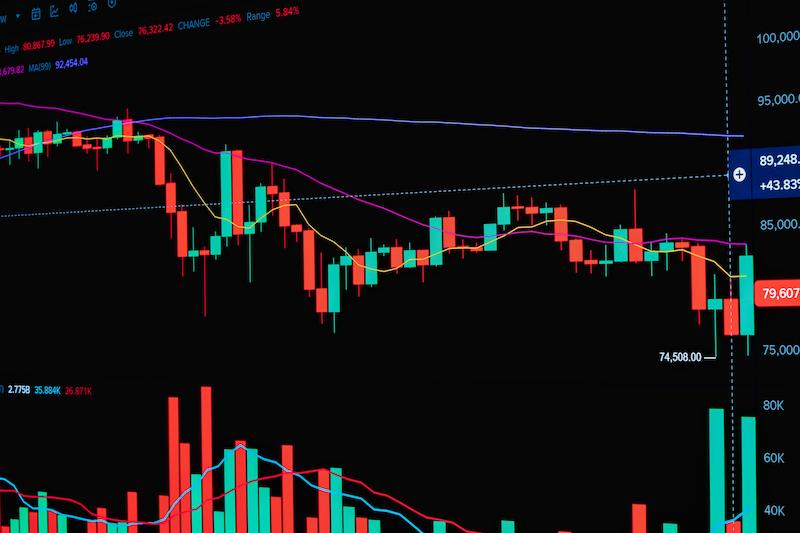
Markets rarely move as one unit. At any moment, some industries are enjoying tailwinds while others face headwinds, and leadership changes as the economy moves through phases. Traders reading the Kospi Index may notice technology-heavy segments driving moves there, a reminder that sector leadership shapes overall performance. Likewise, followers of the Sensex Index know that banking, information technology and consumer companies take turns in the spotlight. Understanding this rotation can help patient investors position intelligently without turning into frantic traders.
The Economic Cycle and Sector Behaviour
Economics follows a business cycle comprising of growth, peak, slowdown and recovery. Different sectors tend to do better at different times. In the initial phase of a recovery, financials, autos and real estate tend to benefit from easy credit and falling rates. Capital goods, infrastructure and industrials are the next to recover. Towards the end of a cycle, commodity and energy stocks lead the market as inflation starts to rise. Defensive sectors like fast-moving consumer goods, pharma and utilities do better during slowdowns as demand for their products is consistent. These are general tendencies, and there are always exceptions.
India-specific factors
Monsoon has a strong bearing on rural demand and hence on tractor sales, fertilisers and consumer staples. Government spending bodes well for roads, railways, defence and housing. Policies promoting manufacturing will benefit electronics, chemicals and auto ancillaries. Credit growth and deposits will improve the profitability of banks. Software exports and pharma are influenced by global demand and foreign exchange rates. Understanding the factors that drive a sector is critical to understand why and how it will do better.
Rotation strategies
It is not easy to time the market and rotate between sectors successfully. It makes sense to stick to your core and make tactical additions in other sectors. For instance, if you feel positive about a sector, you could add 5% more to your allocation to that sector. Sector and thematic funds offer an alternative to directly buying individual stocks. They let you rotate between sectors without having to micro-manage your portfolio. Use them cautiously though, as any concentration beyond a certain level increases risk. Relative strength analysis is another way to identify sectors that are outperforming. It measures the performance of a sector against the market as a whole. It is a useful adjunct to fundamentals but should not replace it.
Valuations as a check
If a sector has done really well, it may already have priced in a lot of good news. Before buying into a sector, check if its valuations are in line with expectations. Compare its price to earnings ratio with where it has been historically and where it is likely to be in future. A sector that is cheap today has the potential to be cheaper tomorrow. An expensive sector has scope to get more expensive. It is a good idea to buy sectors that are cheap considering their fundamentals but not necessarily their price to earnings multiple.
It is also a good idea to assess earnings revisions. A lot of positive revisions is a good sign. It means that analysts are expecting higher earnings for the sector. Consistently negative revisions on the other hand should act as a caution.
Rotation pitfalls
Rotation strategies can be very rewarding but they are fraught with pitfalls. A lot of people make the mistake of trying to time the market too often. This leads to increased transaction costs and tax liability. It is important to set limits for yourself as to how much money you will deploy in rotation and how frequently you will do it. Also bear in mind that while last year’s winner could be this year’s loser.
It is easy to get sucked into buying into a sector because everyone else is doing it. Remember that markets are fickle and can turn around quickly. Set stop loss orders so that you can exit a sector if it starts to underperform. It is important to set clear exit rules so that you do not get unnecessarily triggered by short term fluctuations.
Conclusion
As far as the average investor is concerned, it is best to use rotation as a tool to maintain balance rather than trying to time the market. You should avoid having too much money in any one sector. Also consider adding to your investments in sectors that have the potential to lead in the future even if they are temporarily out of favor. That way, you make profits on your knowledge rather than the vagaries of the market.